
Table of Contents
- What a Service Body Truck Actually Does for Your Business
- Service Body vs. Standard Utility Truck: Key Differences
- Payload Capacity, GVWR, and Chassis Cab Choices
- Reliable Used Trucks for Contractors: Specs That Matter
- Used Work Truck Inspection Tips Before You Buy
- Commercial Truck Financing Options and Total Cost of Ownership
- Upfitting, Tool Organization, and Compliance Requirements
- Conclusion
- Frequently Asked Questions
Last Updated: September 30, 2026
What a Service Body Truck Actually Does for Your Business
A service body truck is a commercial vehicle built on a chassis cab and fitted with enclosed storage compartments, shelves, and lockable bins along the sides and rear, designed to carry tools and parts to job sites. This guide from Routemaster, LTD covers how to choose one that fits your trade, payload, and budget.
Service Body vs. Standard Utility Truck: Key Differences
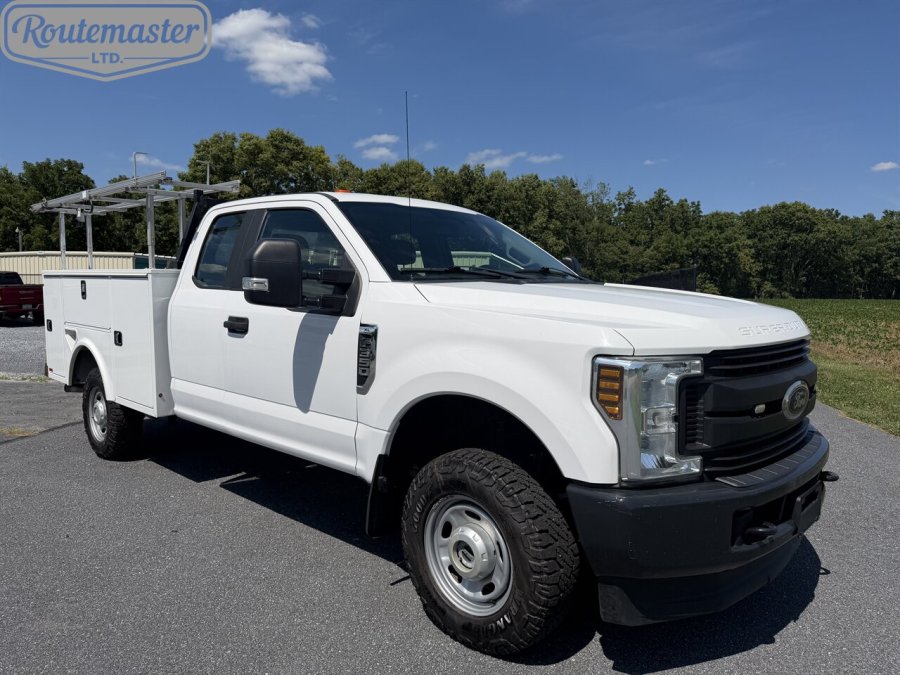
The core distinction is purpose-built storage versus open cargo space. A standard utility truck gives you a bed and maybe a ladder rack. A service body adds lockable compartments, integrated shelving, and a work-ready layout that keeps tools sorted and secure.
That difference shows up in daily workflow:
- Cargo security: Enclosed compartments lock individually, so expensive tools are not visible or accessible.
- Tool organization: Dedicated bins and drawers cut the time spent searching for equipment.
- Weight distribution: A service body spreads tool weight along the chassis rather than concentrating it in one spot.
Payload Capacity, GVWR, and Chassis Cab Choices
Payload capacity is the maximum weight a truck can carry, calculated by subtracting curb weight from gross vehicle weight rating (GVWR). Exceeding it affects braking, handling, and safety, and can void your warranty and put you out of compliance with federal weight rules.
The Ratings That Actually Matter
Buyers tend to fixate on GVWR alone. In practice, four ratings work together, and the lowest governs what you can legally and safely carry:
- GVWR (Gross Vehicle Weight Rating): The maximum the fully loaded truck can weigh, chassis plus body plus cargo plus people.
- Curb weight: The truck as it sits, including the service body, full fluids, and a full tank of fuel.
- GAWR (Gross Axle Weight Rating): The maximum load each axle can carry, front and rear are rated separately, and the rear axle is almost always the limiting factor on a loaded service body.
- GCWR (Gross Combined Weight Rating): The maximum combined weight of the truck plus any trailer you tow.
A Worked Payload Example
Suppose a single-rear-wheel chassis cab has a 10,000 lb GVWR and a curb weight of about 6,000 lb once the service body is mounted, leaving roughly 4,000 lb of payload. Load it realistically:
- Tools, cases, and stocked parts: 1,200 lb
- Ladder rack and mounted equipment: 250 lb
- Fuel (a 40-gallon tank at about 7 lb per gallon of diesel): ~280 lb
- Two-person crew: ~350 lb
- Trailer tongue weight if towing: 500 lb
A service body is not free weight. A steel body with shelving and a ladder rack can consume a meaningful share of a light chassis’s payload before you load a single tool. Always get the body’s shipping weight in writing from the upfitter and subtract it from the chassis payload.
Calculating Payload for Tools, Ladders, and Crew
Walk through the numbers before you buy:
- Weigh or estimate your full tool load, including cases and boxes.
- Add ladder racks and mounted equipment.
- Add fuel, which can run several hundred pounds on larger tanks.
- Add crew weight for every seat you fill.
- Add trailer tongue weight if you tow.
- Compare the total to the payload rating, leaving a safety margin.
A chassis cab gives you more flexibility for a service body because it is sold without a bed, letting the upfitter match the body to the wheelbase and weight rating. Check the Federal Motor Carrier Safety Administration guidance on vehicle weight for how weight ratings factor into commercial operation.
| Configuration | Best For | Watch Out For |
|---|---|---|
| Single rear wheel | Light tool loads, tight job sites | Lower payload ceiling |
| Dual rear wheel | Heavy tools, towing | Wider turning radius |
| Chassis cab | Custom upfits | Requires body installation |
| Standard bed truck | Occasional hauling | Limited secure storage |
How the Body Itself Eats Payload
Two trucks with identical GVWR can have very different usable payload once the body is mounted:
- Steel bodies are heavier but cheaper and easier to repair. On a light chassis, the weight penalty can be several hundred pounds versus aluminum.
- Aluminum bodies cost more upfront but return payload and resist corrosion, which matters in regions that use road salt.
- Enclosed bodies with full shelving and drawer packs add weight at every level. More organization means less payload for cargo.
- Ladder racks, cranes, and compressors are the most common payload surprises because buyers spec them after the truck is already ordered.
Reliable Used Trucks for Contractors: Specs That Matter
Reliable used trucks for contractors share a few traits: documented maintenance, a payload rating that matches the work, and a body that has not been abused. Focus on verifiable specifications rather than cosmetic condition.
Priority specs to check:
- GVWR and payload rating matched to your actual load
- Engine hours and mileage as a combined wear indicator
- Towing capacity if you pull trailers or equipment
- Wheelbase and body length for maneuverability on job sites
- Trim level and any fleet management or telematics already installed
Used Work Truck Inspection Tips Before You Buy
Start with the frame, not the paint. Rust, cracks, or prior accident repairs on the chassis are the most expensive problems to fix and the easiest to hide under a fresh coat.
Work through this checklist before committing:
- Inspect the frame rails for rust, bends, or weld repairs
- Check the service body compartments for water damage and door alignment
- Test every lock and latch on the storage compartments
- Review maintenance records and service intervals
- Check tire wear for uneven patterns that signal alignment issues
- Verify the payload rating on the door jamb sticker
- Test drive loaded if possible, not just empty
Commercial Truck Financing Options and Total Cost of Ownership
Total cost of ownership includes far more than the purchase price: financing terms, maintenance, fuel, insurance, and resale value all shape what the truck costs you per year.
- Traditional loans through a bank or credit union, often requiring a down payment
- Dealer-arranged financing that bundles the purchase with flexible terms
- Lease-to-own arrangements for businesses that want lower upfront costs
- Equipment financing tied to the vehicle as collateral
Upfitting, Tool Organization, and Compliance Requirements
Upfitting is the process of installing the service body and any additional equipment onto the chassis. A good upfit matches the body to your trade, adds the storage you use, and keeps the truck within its weight rating. A bad upfit is a stack of aftermarket parts that never quite fit, rattles loose, and quietly pushes the truck over its rear axle rating.
The Upfit Sequence
Order of operations matters more than most buyers expect. A typical professional upfit runs in this order:
- Chassis selection, wheelbase, cab-to-axle dimension, GVWR, and rear axle ratio chosen to match the intended body and load.
- Body mounting, the service body is mounted to the chassis frame with the correct subframe and isolators, not bolted directly through the rails.
- Compartment fit-out, shelving, drawer packs, dividers, and bins installed to match the tool inventory.
- Exterior equipment, ladder racks, cranes, compressors, and lighting added and weighed.
- Electrical and telematics, wiring for work lights, inverters, and fleet tracking integrated with the chassis harness.
- Final weight verification, the completed truck is weighed to confirm it is under GVWR and each axle is under its GAWR.
Tool Organization That Earns Its Weight
Tool organization drives productivity more than most buyers expect: ladder racks, drawer systems, and compartment dividers turn a truck into a mobile workshop, while anchor points and bins keep everything secure.
Compliance Requirements by Weight and Use
Compliance requirements vary by vehicle weight and use. Trucks above certain thresholds may fall under federal or state commercial regulations, including driver requirements, hours-of-service rules, and periodic inspections, and the thresholds are what buyers most often get wrong.
A few commonly cited federal reference points:
- 10,001 lb GVWR and above: Often the line at which a vehicle is treated as a commercial motor vehicle for certain federal safety and driver-qualification purposes when operated in interstate commerce.
- 26,001 lb GVWR and above: Commonly the threshold at which a commercial driver’s license (CDL) may be required, depending on the vehicle and what it is towing.
- Intrastate operations: Many states set their own thresholds, and a truck that is exempt under federal rules may still be regulated by the state.
Weight class drives licensing, insurance, and inspection obligations. A truck that is a few hundred pounds over a threshold can move you into a different regulatory category. Weigh the completed truck, not the bare chassis.
Ergonomics and Operator Safety on the Job Site
Ergonomics and operator safety are the angles most buying guides skip. Poorly placed compartments force awkward lifting, which adds up to injuries over months of daily use. For a business running the same truck every day for years, ergonomics is not a comfort feature, it is a retention and workers’ compensation issue.
- Compartment height: Waist-height compartments reduce bending and overhead reaching. Deep compartments at floor level force the worst lifting posture.
- Step-up height: Lower step-in heights and well-placed grab handles reduce slips getting in and out of the bed.
- Ladder rack access: A rack you can reach from the ground or a single step is safer than one that requires climbing into the bed with a ladder on your shoulder.
- Interior lighting: Compartment lights reduce the need to hold a flashlight while reaching into a dark bin.
- Door hold-opens: Latches that keep compartment doors open prevent the door from swinging shut on an arm or hand.
- Drawer weight ratings: A drawer rated for 200 lb that is loaded with 300 lb of tools will fail, usually at the worst time.
Conclusion
Choosing the right service body truck means matching payload, storage, and cost to how your business actually works, and that takes more than a quick look at the lot. At Routemaster, LTD, every vehicle is personally inspected, examined, and test-driven by our team, and we only sell trucks we would buy for our own business. With over 30 years of experience, flexible financing, and a simple online reservation system, we help you find a work-ready truck without the guesswork.
Frequently Asked Questions
What are the key differences between a service body and a standard utility truck?
A service body truck carries enclosed storage compartments built into the sides of the bed, with lockable doors, shelves, and anchor points for tools. A standard utility truck usually has an open bed or a simple flatbed with a ladder rack. Service bodies suit trades that carry expensive hand tools, parts, and diagnostic gear because everything stays locked and organized. Standard utility beds cost less and handle bulky cargo like pipe or lumber better.
What should contractors look for when inspecting a used service body truck?
Check the frame rails for cracks or heavy rust, then open every compartment door and test the latches and hinges. Look at the compartment floors for water stains, which signal seal failures. Under the hood, review service records for oil changes and transmission work. Ask for the GVWR plate and confirm the body weight plus your tool load stays under it. A used work truck inspection should also cover tires, brakes, and any signs of frame repair.
How do I determine the correct payload capacity for my service body truck?
Start with the GVWR on the driver-side door jamb, then subtract the curb weight of the truck, body, and upfit. The remainder is your payload. Add up your tools, ladder racks, welder, compressor, and crew weight, and keep the total at least 10 percent under the payload figure. A 1-ton chassis cab with a steel service body often leaves 2,500 to 3,500 pounds of usable payload, while a half-ton truck with the same body can run out of capacity fast.
Which chassis configurations are best for heavy-duty service bodies?
A chassis cab in the 3500 or 4500 series with dual rear wheels handles most heavy service bodies. Dual rear wheels add stability when the body is loaded and reduce sway on the highway. For bodies over 9 feet, a 4500 or 5500 chassis with a heavier GVWR gives you room for a crane, compressor, or large ladder rack. Match the body length to the cab-to-axle measurement so the compartments do not overhang the rear wheels.
Are 2026 commercial truck prices expected to stabilize?
New commercial truck prices have moved less sharply than in 2022 and 2023 as supply chains recovered, but demand for chassis cabs keeps upward pressure on sticker prices. Used service body trucks hold value well because upfit costs stay high. Buyers watching the market in 2026 should compare a late-model used unit with a new chassis plus a new body, since the used route often saves the cost of the upfit entirely.
What commercial truck financing options are available for small businesses?
Most dealers and lenders offer equipment loans, leases, and Section 179-friendly purchase structures. An equipment loan spreads the cost over 36 to 72 months and builds equity. A lease keeps monthly payments lower but you return the truck at the end. Many lenders want a down payment between 10 and 20 percent plus two years of business tax returns. Ask whether the lender reports to business credit bureaus, since on-time payments can help future approvals.
Do service body trucks hold their resale value?
Service body trucks depreciate more slowly than cargo vans in many trades because the upfit itself has lasting value and buyers pay for a work-ready unit. A well-maintained truck with documented service records and a clean body will resell faster than a stripped chassis. Rust, cracked compartment doors, and missing keys for lock boxes cut resale value sharply, so fix small issues before you sell or trade.