
Table of Contents
- Why Reliable Used Trucks for Contractors Matter in 2026
- Top-Rated Used Trucks for Longevity and Contractor Work
- Gas vs. Diesel Engines for Heavy Towing and Hauling
- Used Truck Inspection Checklist for Contractors
- Commercial Truck Financing Options for Small Businesses
- Total Cost of Ownership: What Contractors Often Overlook
- Upfitting and Storage Solutions for Job-Site Efficiency
- Commercial vs. Consumer Usage: Why Wear Matters
- Frequently Asked Questions
Last Updated: September 20, 2026
Why Reliable Used Trucks for Contractors Matter in 2026
A dependable work truck is the backbone of any contracting business, and shopping for used trucks for contractors is often the smartest financial move. A used truck for contractors is a pre-owned pickup or chassis cab that has been inspected for the demands of daily job-site work: heavy payloads, towing, and constant start-stop driving. This guide from Routemaster, LTD draws on our commercial vehicle experience to help you buy with confidence.
The stakes are higher than they look. When a truck goes down mid-project, you lose billable days and pay for rentals out of pocket. That math changes how you should shop. Below, we break down the models worth targeting, the engines that hold up, and the inspection steps that separate a bargain from a money pit.
The best used work truck isn’t the cheapest one on the lot. It’s the one with documented service records, a healthy frame, and a powertrain that matches your actual towing and payload needs.
Top-Rated Used Trucks for Longevity and Contractor Work
Certain models have earned reputations among tradespeople for reaching high odometer readings without major failures. The picks below reflect that consensus, with notes on what each does best for contractor work.
Ford F-250/F-350 Super Duty (2011-2016)
The 6.2L V8 gas and 6.7L Power Stroke diesel in these years are the draw. Frame integrity holds up well, and parts are everywhere, which keeps repairs fast. Watch for rust on the rear wheel arches and check the transmission service history closely.
Chevrolet Silverado 2500HD/3500HD (2011-2016)
The 6.0L V8 gas engine is a known workhorse with simple maintenance needs. These trucks ride comfortably and tow well with the right towing package. The common weak point is the transmission cooler lines, so have those inspected.
Ram 2500/3500 (2013-2018)
The 6.7L Cummins diesel delivers strong torque for heavy towing, and the coil-spring rear suspension gives a smoother ride loaded. The emissions systems on later models need attention, so ask for service records.
Toyota Tundra (2007-2021)
The Tundra’s V8 is legendary for longevity, and resale value stays strong. It lacks the heavy-duty payload of a three-quarter-ton, so it suits lighter service work better than maxed-out hauling.
Nissan Titan XD (2016-2019)
The Titan XD sits between half-ton and three-quarter-ton, with a Cummins diesel option. It tows well for the price, though aftermarket upfitting options are thinner than Ford or Chevy.
Gas vs. Diesel Engines for Heavy Towing and Hauling
This is the single biggest powertrain decision a contractor makes on a used truck, and it should be driven by your actual duty cycle, not brand loyalty. The right answer changes depending on how often you tow, how heavy the load is, and how long you plan to keep the truck.
When diesel wins
Diesel engines make peak torque at low RPM, which is exactly what you want when pulling a loaded trailer up a grade or merging onto a highway. A modern 6.7L Cummins or 6.7L Power Stroke makes well over 800 lb-ft of torque, while a comparable gas V8 in the same truck makes roughly 400 to 475 lb-ft.
When gas wins
Gas engines cost less upfront, cost less to repair, and tolerate irregular maintenance better. A 6.2L Ford V8 or 6.0L GM V8 uses simpler emissions equipment, no diesel particulate filter, no DEF system, and no turbocharger to fail. Parts are cheaper and nearly any shop can work on them. For contractors who tow occasionally, run mostly in town, or put on low annual miles, gas is the practical pick.
The maintenance math
Diesel maintenance is not just more frequent, it is more expensive per service. Fuel filters, oil changes with diesel-rated oil, and DEF consumption all add up. Gas engines need less frequent service and cheaper parts. Over a five-year ownership window, the maintenance gap can offset a meaningful chunk of the diesel fuel savings if you are not actually towing heavy on a regular basis.
| Factor | Gas V8 | Diesel |
|---|---|---|
| Upfront cost | Lower | Higher |
| Torque under load | Adequate | Strong |
| Fuel economy empty | Comparable | Comparable |
| Fuel economy loaded | Worse | Better |
| Routine maintenance cost | Lower | Higher |
| Emissions-system risk | Low | Higher on older trucks |
| Resale value | Good | Strong in HD trim |
| Best for | Mixed use, lighter towing | Daily heavy towing |
A simple decision rule
If you tow more than half your working days and the trailer is heavy, buy diesel. If you tow occasionally, work mostly local, or want the lowest total cost of ownership, buy gas. If you are unsure, gas is the safer used-truck bet because it carries less repair risk and is easier to inspect.
On a used diesel, ask for the emissions-system service history specifically. A truck that has had DPF or EGR work done recently is often a better buy than one with no records, because you know the expensive failure already happened.
Used Truck Inspection Checklist for Contractors
A thorough inspection is the difference between a reliable workhorse and a costly mistake. Contractors should check frame integrity, rust, and powertrain health before any money changes hands.
Use this checklist on every candidate truck:
- Pull a vehicle history report for accidents and title issues
- Inspect the frame for rust, cracks, and prior repairs
- Check the odometer reading against service records
- Test the transmission under load, not just at idle
- Verify 4WD engages properly if equipped
- Confirm the towing package and hitch rating match your needs
- Look for leaks under the engine and transmission
- Review all preventative maintenance records
Skipping the frame check is the most expensive shortcut. A rusted frame can fail under load and often can’t be repaired economically, turning a “good deal” into scrap.
Commercial Truck Financing Options for Small Businesses
Financing a used commercial truck usually comes down to three paths: dealer financing, bank loans, and equipment-specific lenders. Each weighs your credit, down payment, and the truck’s age differently.
Total Cost of Ownership: What Contractors Often Overlook
Most used-truck guides stop at purchase price. That is the wrong number to shop on. For a working contractor, the purchase price is only the entry fee. The real cost is what the truck drains from your business every month it is in service, and that number can swing by thousands of dollars a year between two trucks that look identical on the lot.
The five cost buckets
Fuel. This is usually the largest ongoing expense. A heavy-duty gas truck towing regularly may see single-digit fuel economy under load, while a diesel in the same duty cycle can do meaningfully better. Over 20,000 working miles a year, that difference compounds fast. Estimate your annual fuel cost using your real duty cycle, not the EPA sticker.
A simple TCO worksheet
Before you commit, write down these numbers for each candidate truck:
- Estimated annual miles
- Fuel cost per mile at your real duty cycle
- Annual insurance quote for commercial use
- Expected annual maintenance based on service records
- Projected resale value at your planned sell date
- A downtime allowance for the truck’s known weak points
Why this matters for used trucks specifically
A used truck’s service history is the best predictor of its future cost. A truck with complete records, a clean frame, and a powertrain that matches your workload will almost always beat a cheaper truck with unknown history, even if the cheaper one has lower miles. Miles alone do not tell you how hard those miles were.
The cheapest truck on the lot is often the most expensive to own. If a deal looks too good, the missing service records or hidden frame damage is usually where the cost is hiding.
Upfitting and Storage Solutions for Job-Site Efficiency
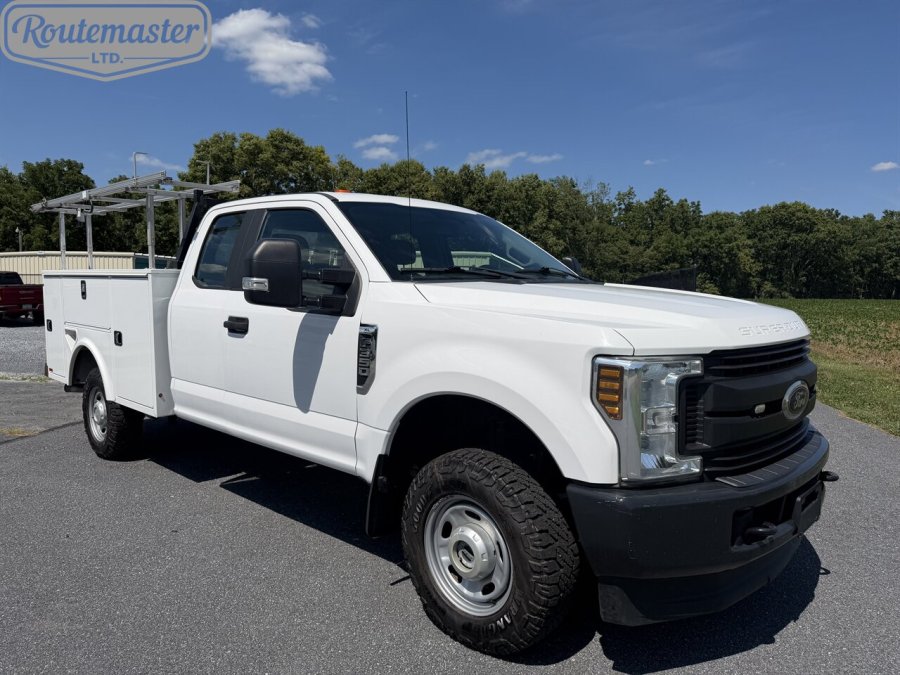
The right upfit turns a truck into a mobile workshop. Ladder racks, bed liners, service bodies, and locking storage bins keep tools secure and organized, which saves time on every job. A bed liner protects against the dents and scratches that come with daily commercial use.
Commercial vs. Consumer Usage: Why Wear Matters
A truck used for commercial work wears differently than one driven by a homeowner. Commercial use means more load cycles, more idling, and more stop-start driving, all of which stress the transmission and brakes faster. That’s why a fleet vehicle with higher miles can sometimes be a better buy than a low-mileage personal truck that sat unused.
Frequently Asked Questions
What is the most dependable used truck for heavy-duty contracting work?
For heavy-duty contracting, the Ford F-250/F-350 Super Duty (2011-2016) with the 6.2L V8 or 6.7L Power Stroke diesel is a top pick. It offers high payload capacity and towing capability, with parts widely available. The Chevrolet Silverado 2500HD/3500HD is also dependable. Always check the vehicle history report and have a mechanic inspect the frame and transmission. Regular preventative maintenance is key to longevity.
How many miles is too many for a used commercial work truck?
Mileage alone isn’t the deciding factor; maintenance history matters more. A well-maintained truck with 150,000 miles can outlast a neglected one with 80,000 miles. For contractors, look for service records showing regular oil changes and transmission service. Diesel engines often last 300,000+ miles with proper care. Use the odometer reading as a starting point, but prioritize a thorough mechanical inspection.
Are diesel or gasoline engines better for contractor work trucks?
Diesel engines excel in heavy towing and hauling, offering higher torque and better fuel efficiency under load. They cost more upfront but can have lower total cost of ownership over many miles. Gas engines are cheaper to buy and maintain, with lower fuel costs in some regions. For contractors who tow heavy equipment daily, diesel is often worth it. For lighter duty, gas may suffice.
What should I look for in commercial truck financing options?
Look for flexible terms, competitive interest rates, and minimal down payment requirements. Many lenders offer equipment financing specifically for commercial vehicles, which can preserve your operating capital. Check if the lender understands your industry and can approve based on business revenue rather than just personal credit. Always ask about hidden fees and prepayment penalties. Routemaster, LTD offers financing options tailored to small businesses.