
Last Updated: October 25, 2026
Quick Summary
Choose a truck for heavy tools by starting with the load, not the vehicle: total the weight of tools, equipment, passengers, accessories and cargo, then subtract it from the payload rating on that specific truck’s door-jamb certification label. Verify GVWR and GAWR on the label, confirm curb weight at a public scale, and keep weight low and forward so both axles stay within their ratings.
- Payload is the weight carried on the truck; towing capacity is weight pulled behind it on a trailer.
- Brochure maximum payload reflects the lightest configuration, not the truck in front of you.
- A steel service body weighing 1,100 lb installed can cut payload margin to 400 lb.
- Weigh the empty truck at a public scale and subtract it from GVWR for real payload.
- One axle can hit its GAWR while the truck is still under its overall payload rating.
Table of Contents
- Start With the Load, Not the Truck
- Truck Payload Capacity for Tools: The Math That Decides Everything
- How to Verify Payload and Axle Ratings on a Specific Truck
- Pickup vs. Service Body Truck for Contractors: Which Body Fits Your Trade
- Pickup Truck Tool Box Fit and Securing Heavy Tools
- Load Distribution, Axle Limits, and Handling
- Used Work Truck Inspection Checklist Before You Commit
- Reserve a Truck That Matches Your Tool Load
- Frequently Asked Questions
Start With the Load, Not the Truck
Most contractors start shopping for a truck for heavy tools by browsing listings and falling for a clean body and a low price. That order is backwards. The weight of your tools, the way you distribute it, and the ratings on the specific truck’s door jamb decide whether that vehicle can legally and safely do the job.
Below, we’ll walk through the seven steps we use to match a truck to a real tool load, starting with the calculation most buyers skip.
Truck Payload Capacity for Tools: The Math That Decides Everything
Truck payload capacity for tools is the maximum weight a vehicle can carry, and it is not the same as what a brochure brags about. The number that matters is the payload rating on the specific truck’s certification label, and it shrinks with every option, accessory, and passenger you add. Most buyers never run this math, which is why overloaded work trucks are so common on job sites.
Payload vs. Towing Capacity
Payload is weight carried on the truck itself, tools, passengers, upfit, and cargo. Towing capacity is weight pulled behind it on a trailer. A truck can have a strong tow rating and still run out of payload long before the trailer is full, because tongue weight, tools, and passengers all count against payload. Buyers who confuse the two end up overloaded with an empty bed.
Calculating the Complete Loaded Payload
Add up everything that rides on the truck, not just the tools:
- Tool weight: boxes, chests, compressors, generators, ladders
- Equipment weight: welders, pumps, pipe threaders, batteries
- Passenger weight: crew plus gear bags
Then subtract that total from the truck’s payload rating. If the result is negative or close to zero, the truck is wrong for the job no matter how good it looks.
A Worked Example: Fitting a Real Tool Load to a Real Truck
Suppose you run a two-person electrical crew and are looking at a used three-quarter-ton crew-cab pickup with a manufacturer’s payload rating of 3,200 lb on its door-jamb label. Here is how the load stacks up:
| Item | Weight |
|---|---|
| Two technicians (with gear bags) | 400 lb |
| Crossover bed box (empty) | 150 lb |
| Hand tool bags and chests | 350 lb |
| Two cordless tool kits and batteries | 120 lb |
| Portable generator | 180 lb |
| Conduit bender and threader | 140 lb |
| Ladder rack and two ladders | 160 lb |
| Consumables, parts, and fluids | 200 lb |
| Total loaded payload | 1,700 lb |
That leaves 1,500 lb of headroom against the 3,200 lb rating, comfortable for this crew. Now change one variable: swap the pickup bed for a steel service body that weighs 1,100 lb installed. The loaded total jumps to 2,800 lb, leaving only 400 lb of margin. Add a third technician and a full fuel transfer tank and you are at or over the rating.
Build a one-page payload worksheet for every truck you shop. List the door-jamb payload rating at the top, then every item that will ride on the truck, and total it. Keep the worksheet with the listing so you can compare candidates side by side instead of guessing from memory.
Why the Brochure Number Is Not Your Number
Manufacturer marketing often quotes a “maximum payload” for a model line, typically the lightest cab, shortest bed, two-wheel-drive, base-engine configuration. Your truck is almost certainly heavier: crew cab, four-wheel drive, diesel, optional axles, and any dealer-installed accessories all subtract from that figure before you load a single tool. The only payload number that applies to the truck in front of you is the one on its certification label, minus its actual curb weight.
Quick Sanity Checks Before You Buy
- Weigh the empty truck at a public scale and subtract that from the GVWR on the label, that is your real available payload.
- Add the weight of every planned accessory (service body, rack, box, winch, tank) before you commit to an upfit.
- Include the crew. A four-person crew at 200 lb each is 800 lb of payload gone before the first tool box.
How to Verify Payload and Axle Ratings on a Specific Truck
Never trust a listing’s claimed capacity. Open the driver’s door and read the certification label, which states the gross vehicle weight rating (GVWR) and the front and rear gross axle weight ratings (GAWR). Subtract the truck’s curb weight, which you can confirm at a public scale, to get real payload. Check the owner’s manual or the manufacturer’s towing guide for the configuration-specific rating, since cab style, bed length, drivetrain, and axle ratio all change the number.
Pickup vs. Service Body Truck for Contractors: Which Body Fits Your Trade
A pickup works when your tools are light and occasional. A service body truck wins when heavy tools, secure storage, and daily job site runs are the norm. If you’re weighing the two, our guide to choosing the right service body truck size walks through matching body length to your trade, and our breakdown of essential features for service body trucks covers what to look for in shelving, compartments, and tie-downs.
Pickup Configurations: Cab, Bed, and Chassis Styles
Cab style and bed length change both payload and practicality. A regular cab with a long bed carries more and fits full sheets of material. An extended or crew cab trades bed length for people. Chassis cab models hand the rear to an upfitter, which is the right path when you need a custom body. Wheelbase and single versus dual rear wheel also shift the ratings, so match the configuration to the load, not to looks.
Gas vs. Diesel for Work Use
Diesel engines deliver more torque for hauling heavy loads and tend to hold resale value, but they cost more upfront and carry higher maintenance bills. Gas engines cost less to buy and service and handle moderate tool loads fine. For a truck that mostly carries tools around town, gas is often the smarter spend. For constant heavy hauling and towing, diesel earns its keep.
Pickup Truck Tool Box Fit and Securing Heavy Tools
Pickup truck tool box fit comes down to bed length, box dimensions, and how the box affects payload. A crossover box eats bed space; a low-profile chest keeps the bed usable. Whatever you choose, bolt it down and keep the heaviest items low and forward. Loose heavy tools become projectiles in a hard stop, and an unsecured chest can tear free in a collision.
- Measure the bed’s interior length, width, and height before buying any box
- Add the box’s weight to your payload total
- Use rated tie-downs and lockable latches
Load Distribution, Axle Limits, and Handling
Even a truck under its payload rating can be unsafe if the weight sits in the wrong place. Axle ratings cap how much weight can rest on the front and rear axles, and loading everything behind the rear axle pushes the truck toward its rear GAWR while lightening the steering axle. Spread heavy tools forward and low, keep the center of gravity down, and recheck handling after you load up.
Reading Front and Rear GAWR Together
The certification label lists a gross axle weight rating (GAWR) for the front axle and one for the rear. Payload capacity is a single number, but the axles split that load, and one axle can hit its limit while the truck is still under its overall payload rating. A rear-heavy load, a bed full of tool chests behind the wheel wells, can exceed the rear GAWR even when the total is legal.
A Simple Front-to-Rear Balance Procedure
- Weigh the empty truck at a public scale that reports per-axle weights, and record front and rear.
- Load the truck the way you actually work, tools, crew, consumables, upfit.
- Re-weigh per axle and compare each axle to its GAWR on the label.
- If the rear axle is close to its rating, move heavy items forward or remove weight; if the front axle is light, you have loaded too far back.
A common pattern among contractors is to load the heaviest chests directly over or just ahead of the rear axle, keep lighter and bulky items at the tailgate, and reserve the space behind the rear axle for items that must go there. That placement keeps weight off the steering axle and reduces the leverage that makes a loaded truck wander.
How Poor Distribution Changes Handling and Braking
Weight behind the rear axle acts like a lever on the chassis. It lifts weight off the front tires, which reduces steering grip and lengthens stopping distance because the front brakes are doing less work. It also compresses the rear suspension, changes the truck’s pitch under braking, and can make the rear end feel loose in a panic stop or on a wet road.
A truck that sags visibly at the rear, steers light, or noses up under braking is telling you the load is outside its comfortable distribution, even if the total weight is under the payload rating. Fix the placement or the truck before you drive it loaded.
Securing the Load So It Stays Put
Distribution only holds if the load stays where you put it. Heavy tool chests and boxes should be bolted or strapped to the bed or body, not left to friction. Use rated tie-downs anchored to the frame or to factory-rated points, and check the working load limit on every strap and ratchet. Loose heavy tools become projectiles in a hard stop, and an unsecured chest can tear free in a collision.
When Distribution Forces a Different Truck
If your tools are heavy enough that you cannot keep both axles under their GAWR without moving weight to the tailgate, the truck is undersized for the trade. The fix is a higher-rated truck, a different body configuration, or a trailer that carries part of the load, not a creative loading pattern. Running the per-axle math before you buy is the cheapest way to find that out.
Used Work Truck Inspection Checklist Before You Commit
A used work truck can be a smart buy or a money pit, and the difference is in the inspection. Before you commit, run through this checklist:
- Confirm the certification label’s GVWR and GAWR match the listing
- Weigh the truck at a scale and compare to curb weight
- Check the frame for rust, cracks, and prior repairs
Reserve a Truck That Matches Your Tool Load
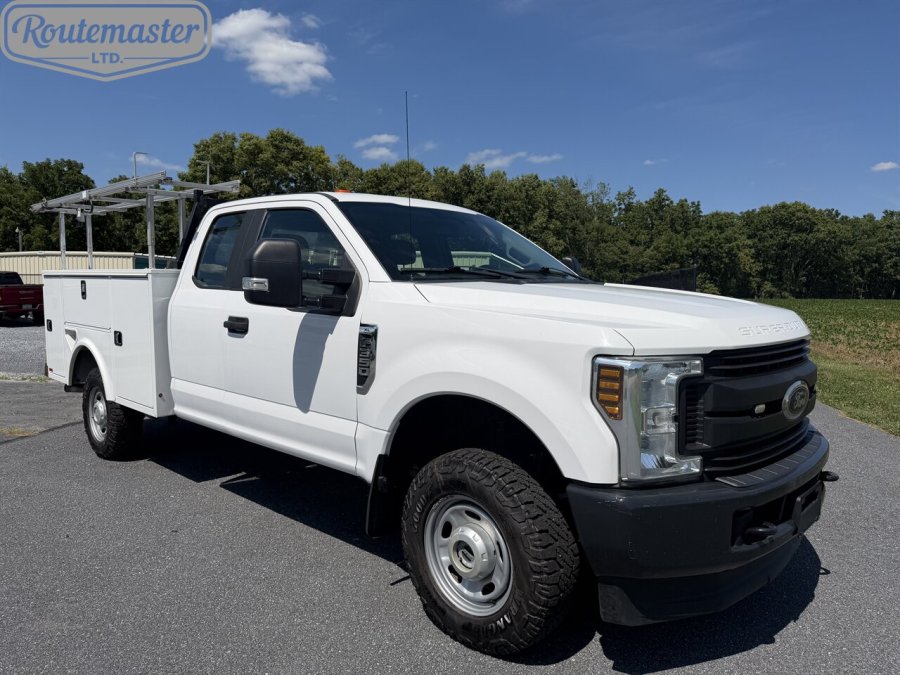
Once you’ve calculated your loaded payload and settled on a body style, the last step is finding a truck that actually matches. That’s where we come in. Every truck we sell is personally inspected, examined, and test-driven by our team, and we only stock vehicles we’d buy for our own business. You can browse our inventory of inspected used commercial trucks and vans, and when you find the right one, place a deposit to hold it before it sells.
Frequently Asked Questions
What type of truck is best for carrying heavy tools?
A service body truck usually beats a standard pickup when tools are the main cargo. Its enclosed compartments lock, keep weight low and spread out, and leave the bed free for materials. A heavy-duty pickup with a low-profile toolbox works if you occasionally haul tools and often tow. Match the truck’s payload rating to your total tool weight plus passengers and accessories before deciding, and check the door-jamb sticker on the exact vehicle.
How do I calculate whether a truck can carry my tools?
Start with the payload rating on the driver’s door jamb, not a brochure figure. Add the weight of every toolbox, tool, ladder rack, compressor, passenger, and personal item you will carry. Subtract that total from the payload rating. If the remaining margin is under a few hundred pounds, the truck is too close to its limit for daily work. Weigh your loaded truck at a public scale to confirm.
Do tool boxes and other equipment count toward a truck’s payload capacity for tools?
Yes. Every pound of toolbox, rack, winch, or bed liner counts against payload, along with the tools inside and the people in the cab. A 200-pound steel toolbox leaves 200 fewer pounds for tools. That is why buyers who add upfitting should choose a truck with a payload rating well above their raw tool weight, ideally with 15 to 20 percent headroom for fuel, passengers, and future purchases.
What should I check when buying a used work truck?
Follow a used work truck inspection checklist: confirm the VIN matches the title, read the door-jamb payload sticker, check frame rails for cracks or rust, inspect suspension and springs for sag, test every compartment latch, and review maintenance records. Start the engine cold, test the transmission under load, and have an independent mechanic inspect it. A reservation on an inspected truck is far cheaper than repairing hidden frame damage later.
Matching a truck to a heavy tool load takes math, not guesswork, and the wrong choice costs you in repairs, downtime, and unsafe driving. At Routemaster, LTD, we take the guesswork out with over 30 years of experience, full inspections on every vehicle, and flexible financing that fits a working budget. Get started with Routemaster, LTD and drive off in a truck built to carry your tools and your business.
