
Table of Contents
- Why the Right Used Delivery Truck Decides Your Margins
- Top Used Trucks for Delivery Business: Pickups, Box Trucks, and Vans
- Used Commercial Vehicle Inspection Tips
- Total Cost of Ownership: The Number That Actually Matters
- Commercial Truck Financing for Small Business
- Used Box Truck Maintenance Checklist
- Frequently Asked Questions
Last Updated: September 27, 2026
Why the Right Used Delivery Truck Decides Your Margins
Choosing the best used trucks for delivery business is a decision that shapes your operating costs for years, not months. At Routemaster, LTD, we have spent over 30 years helping small business owners find commercial vehicles that hold up to daily route work. The truck you pick determines your fuel spend, your repair bills, and how many stops you can realistically run in a day.
Most buyers focus on the sticker price. That is the smallest number in the equation.
A truck that costs less up front but drinks fuel and visits the shop monthly will drain your margins faster than a slightly pricier unit that runs clean.
Top Used Trucks for Delivery Business: Pickups, Box Trucks, and Vans
The best used trucks for delivery business fall into three practical categories: pickups for light and contractor work, box trucks for high-volume local routes, and cargo or cutaway vans for flexible delivery. Each one carries different payload capacity, fuel economy, and upfit potential. Picking the wrong class for your routes is the most expensive mistake in this market.
| Category | Best For | Typical Payload Range | Watch For |
|---|---|---|---|
| Pickup trucks | Contractors, light delivery | 1,500-3,500 lbs | Bed wear, towing setup |
| Box trucks | High-volume local routes | 5,000-10,000 lbs | Lift gate condition, box rot |
| Cargo vans | Flexible city delivery | 2,500-4,000 lbs | Suspension sag, door tracks |
| Cutaway vans | Mixed route and storage | 4,000-8,000 lbs | Chassis flex, upfit wiring |
Used Pickup Trucks for Contractors and Light Delivery
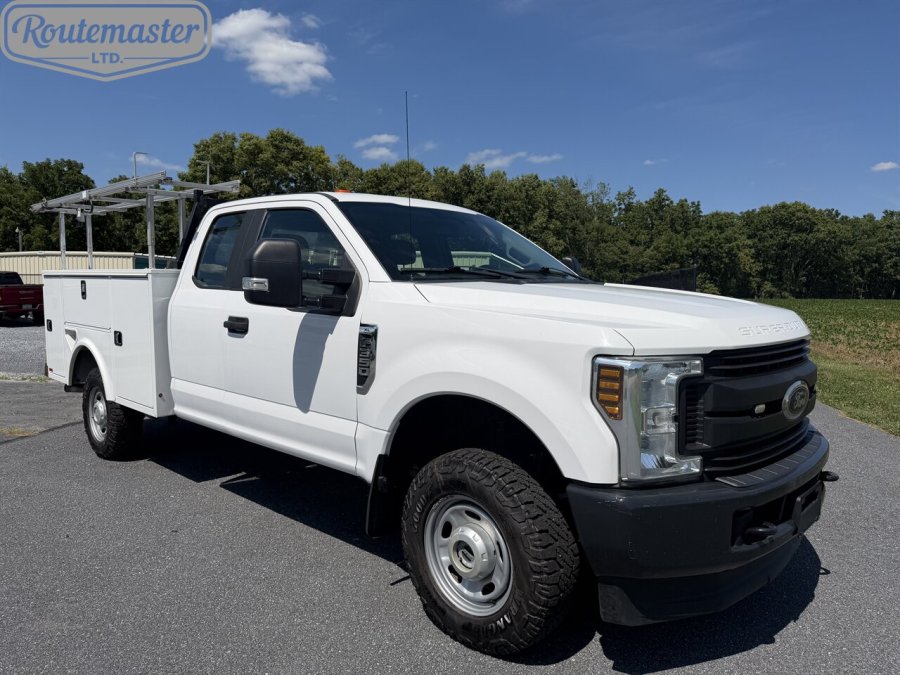
Pickups suit contractors and light delivery because they combine a usable bed with towing capacity. The models that show up most often on delivery routes are the Ford F-150 and F-250, the Chevrolet Silverado 1500 and 2500, the Ram 1500 and 2500, and the Toyota Tacoma and Tundra. A V8 engine remains the workhorse choice for hauling trailers and loaded beds, though it costs more at the pump.
Used Box Trucks for High-Volume Local Routes
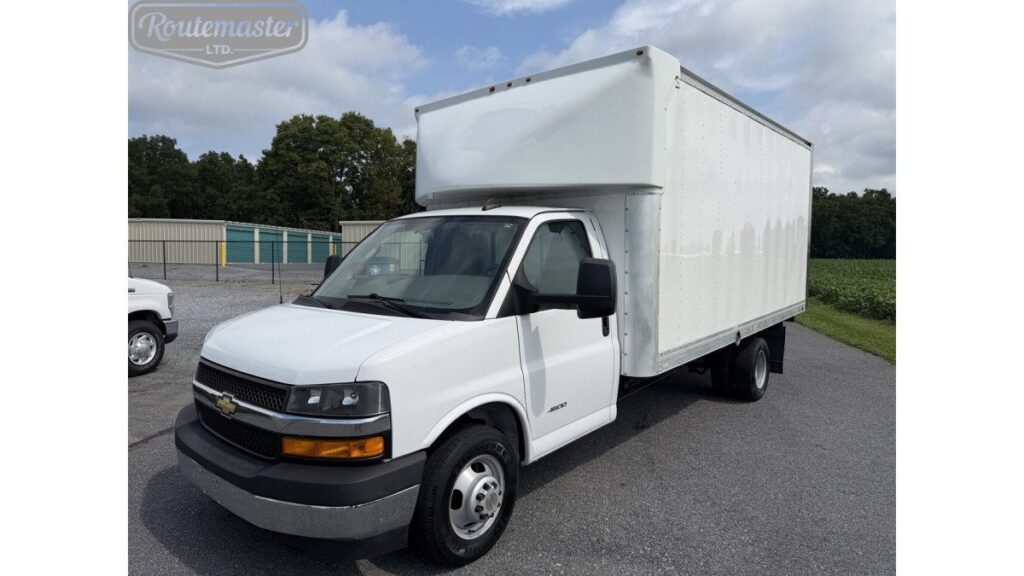
Box trucks move the most cargo per trip, which makes them the backbone of local delivery logistics. The common used units are the Ford E-350 and E-450 cutaway chassis with a 12- to 16-foot box, the Chevrolet Express 3500 and 4500 cutaway, the Isuzu NPR and NQR, and the Freightliner M2 106. Look at the gross vehicle weight rating first, because it decides whether you need a commercial driver’s license or can run the route with a standard license.
Cargo Vans and Cutaway Utility Vans for Flexible Delivery
Cargo vans win on fuel economy and maneuverability in tight streets. The Ford Transit, the Mercedes-Benz Sprinter, the Ram ProMaster, and the Chevrolet Express are the models you will find in volume on the used market. The Transit and Sprinter are the most common for parcel and grocery routes because of their tall roofs and sliding side doors. Cutaway utility vans add a specialized chassis that accepts service bodies, flatbeds, and specialty equipment.
Matching the Truck to Your Route
Before you pick a model, write down three numbers: your heaviest single load, your average stops per day, and your longest one-way run. A contractor hauling tools and a small trailer is usually best served by a half-ton or three-quarter-ton pickup. A route with 40 or more stops and dense residential streets usually favors a cargo van. A route moving palletized goods between a warehouse and a few commercial addresses usually favors a box truck.
Idle hours age a commercial vehicle faster than mileage. A delivery truck that idles through long loading windows can show engine wear equal to twice its odometer reading. Always ask for idle-hour data before you commit.
Used Commercial Vehicle Inspection Tips
A used commercial vehicle inspection should always start with the service history and end with a test drive under load. Mileage threshold matters less than how those miles were earned. A truck with 90,000 highway miles often outlasts one with 50,000 miles of stop-and-go idling.
Here is the checklist we run on every unit:
- Pull the vehicle history report and flag title brands, odometer rollbacks, and gap periods
- Read idle hours, not just mileage, on the engine computer
- Inspect the frame and chassis for rust, cracks, and prior accident repair
- Check the box floor and roof for water intrusion and rot
- Test the lift gate under a real load, not empty
- Scan for stored fault codes even if no warning light is on
- Verify the payload capacity matches your heaviest planned load
- Confirm the powertrain warranty status and remaining coverage
Skipping the vehicle history report is the fastest way to buy someone else’s problem. A branded title or an unexplained mileage gap can cut your resale value and leave you footing repair bills the seller knew were coming.
Total Cost of Ownership: The Number That Actually Matters
Total cost of ownership is the sum of purchase price, fuel, maintenance, insurance, financing, and depreciation over the years you plan to keep the truck. It is the number that separates a good deal from a cheap one. Many buyers never calculate it, then wonder why a low-priced truck costs more by year two.
Run the math on your own routes:
- Estimate annual miles and divide by the truck’s real-world fuel economy
- Multiply by your local fuel price for a yearly fuel figure
- Add scheduled preventative maintenance and a repair reserve of 5-10% of purchase price per year
- Subtract projected resale value at the end of your hold period
Commercial Truck Financing for Small Business
Commercial truck financing for small business works differently from a personal auto loan. Lenders weigh the vehicle’s age, mileage, and use case alongside your business revenue. A truck that is too old or has too many miles may not qualify for standard terms, so the vehicle you choose affects your financing options.
How Lenders Underwrite a Used Delivery Truck
Most commercial lenders apply a simple rule of thumb: the loan term should not outlast the truck’s useful life. A common pattern is to cap terms at 60 months for trucks under 100,000 miles, 48 months for trucks between 100,000 and 150,000 miles, and 36 months or less above that. Some lenders will not finance a commercial truck older than 10 model years, and many will not touch a branded title at all.
Qualified buyers should ask about these terms before signing:
- Down payment requirements and whether a larger down payment lowers your rate
- Loan term length and how it lines up with the truck’s useful life
- Whether the lender allows a commercial vehicle with a branded title
- Prepayment penalties and early payoff rules
- Whether the payment structure can flex with seasonal revenue
- Whether the lender requires commercial insurance with a specific coverage limit
- Whether the loan is reported to your business credit profile
Section 179 and Bonus Depreciation
Many small delivery businesses can deduct part of a used truck’s cost in the year it is placed in service. Under Section 179 of the Internal Revenue Code, a business can elect to expense the cost of qualifying used property, subject to annual limits and the requirement that the vehicle be used more than 50% for business. Bonus depreciation under Section 168(k) may also apply.
The Cost of Getting It Wrong
A truck that stretches your monthly payment past what your routes can support is a truck that sits. Before you sign, run the payment against your average weekly revenue and make sure the truck can cover its own note with room to spare. Getting pre-qualified before you shop keeps you from falling for a truck that stretches your operating budget.
Used Box Truck Maintenance Checklist
Preventative maintenance keeps a used box truck earning instead of sitting in the shop. The goal is to catch wear before it becomes a breakdown on a delivery day. Build these checks into a fixed schedule and log every service.
| Interval | Check | Why It Matters |
|---|---|---|
| Weekly | Tires, lights, fluid levels | Catches safety issues early |
| Monthly | Brake wear, lift gate operation | Prevents route downtime |
| Every 5,000 miles | Oil, filters, belts | Protects engine longevity |
| Every 15,000 miles | Transmission, drivetrain | Guards costly repairs |
| Seasonally | Box seals, roof, undercarriage | Stops rust and water damage |
The cheapest used truck is rarely the most profitable one. Match payload capacity, drivetrain, and service history to your routes, then run the total cost of ownership before you sign.
Frequently Asked Questions
What is the most dependable used truck for small business delivery?
Dependability comes down to service history and inspection, not just the badge. Look for a used commercial vehicle with a documented preventative maintenance record, under 150,000 miles, and a clean vehicle history report. Trucks with a V8 engine and a proven transmission tend to hold up better under daily stop-and-go delivery work. Always get a third-party inspection before buying.
What should I inspect before buying a used commercial delivery vehicle?
Check the frame and chassis for rust or cracks, test the lift gate and door seals, verify the gross vehicle weight rating plate matches your route needs, and scan for engine fault codes. Look at tire wear for alignment issues and check the service history for regular oil changes and brake work. A compression test on higher-mileage engines can reveal hidden problems before you commit.
Is it better to buy a used box truck or a cargo van for local deliveries?
A cargo van works well for small, light packages and tight residential streets. A used box truck gives you more cargo space, a higher payload capacity, and easier loading with a lift gate, which suits bulky or heavy deliveries. If your routes mix both, a cutaway utility van offers a middle ground. Match the vehicle to your typical load size and delivery density.
How do I determine the right payload capacity for my delivery truck?
Add up the weight of your heaviest typical load, plus driver, fuel, and any upfitting like shelves or a lift gate. That total should stay under the truck’s payload capacity, which is the gross vehicle weight rating minus the curb weight. Leave a 10 to 15 percent buffer for safety and future growth. Overloading shortens transmission and brake life and can create legal weight violations.