
Last Updated: October 24, 2026
Quick Summary
To choose a reliable used cargo van, start with your real daily haul and match cargo capacity, payload, roof height, and door openings to it, then verify service records and mileage type. A well-maintained high-mileage van with full records often beats a neglected low-mileage one, so always get an independent pre-purchase inspection before buying.
- Measure floor space between wheel wells and rear door openings against your longest and widest item.
- Check the door jamb sticker for payload capacity, not the brochure.
- Treat roughly 100,000 miles as a caution line rather than a wall.
- Run the VIN through the NHTSA recall lookup and a vehicle-history report.
- Any fail on title status, frame integrity, or a cold-start knock is grounds to walk away.
Table of Contents
- Start With the Load, Not the Listing
- Payload, Towing Capacity, and Wheelbase: The Specs That Decide the Van
- New Versus Used Cargo Vans: Which Fits Your Budget and Downtime Risk
- How Many Miles Is Too Many for a Used Cargo Van?
- Your Used Cargo Van Inspection Checklist, Step by Step
- Why a Pre-Purchase Inspection for a Used Van Is Worth the Money
- Used Cargo Van Total Cost of Ownership: What the Sticker Price Hides
- Reserve a Van That Has Already Been Inspected and Test-Driven
- Frequently Asked Questions
Start With the Load, Not the Listing
Most buyers start shopping by scrolling listings and falling for a clean paint job. That is backwards. To learn how to choose reliable used cargo van inventory, start with a tape measure and a scale, not a photo. We have spent over 30 years watching business owners buy the wrong size van and pay for it in wasted trips.
Write down your real daily haul first:
- Heaviest single item you carry
- Total weight of a full load
- Longest and widest item
That list decides nearly everything that follows.
Match Cargo Capacity and Usable Cargo Area to Your Daily Haul
Cargo capacity is the total volume behind the front seats, but usable cargo area is what actually matters. Wheel wells, shelving, and partition walls eat into that space fast.
Measure the floor between the wheel wells. If you want a shortlist of vans that already fit common trade loads, our guide to the best used cargo vans is a sensible next stop.
Check Roof Height, Interior Clearance, and Door Opening
Roof height decides whether you can stand up inside, and interior clearance decides whether a stacked load fits. Door opening is the spec buyers forget. A wide cargo box means nothing if the rear doors are too narrow for a pallet or a mower deck.
Three quick checks before you commit:
- Stand inside and check headroom with work boots on
- Measure the rear door opening width and height
- Confirm side door clearance if you load from the curb
Payload, Towing Capacity, and Wheelbase: The Specs That Decide the Van
Payload capacity is the maximum weight a van can carry, including cargo, passengers, and upfits. It is the number that separates a van that lasts from one that sags, overheats, and chews through brakes.
Towing capacity matters if you pull a trailer. Wheelbase affects handling and turning radius. A longer wheelbase rides steadier on the highway but is harder to park in tight lots.
Match the specs to the job:
| Spec | What It Controls | Check This |
|---|---|---|
| Payload capacity | Total weight you can carry | Door jamb sticker minus upfit weight |
| Towing capacity | Trailer weight you can pull | Owner’s manual rating |
| Wheelbase | Handling and turning radius | Your tightest daily parking spot |
| Roof height | Standing room and load height | Headroom with boots on |
| Cargo length | Longest item you haul | Floor length behind the partition |
New Versus Used Cargo Vans: Which Fits Your Budget and Downtime Risk
New versus used comes down to downtime risk and cash flow.
For most small businesses, a well-inspected used van wins. You avoid the steepest depreciation and put the savings into working capital. The catch is that the van must be checked properly before you buy.
Watch out: buying on price alone is the fastest way to inherit someone else’s problem.
How Many Miles Is Too Many for a Used Cargo Van?
There is no single mileage cutoff, but many buyers treat roughly 100,000 miles as a caution line rather than a wall. A well-maintained van at higher mileage often beats a neglected low-mileage one.
The more useful question is which miles and which powertrain. A 150,000-mile highway van with full records is often a safer buy than an 80,000-mile delivery van with no history.
Ask these questions:
- Were the miles highway cruising or stop-and-go delivery?
- Is there a full maintenance history?
- Has the transmission or timing system been serviced?
Model-Year and Powertrain Reliability Evidence
Buyers ask which engines, transmissions, and years to avoid, but general guides rarely give sourced, model-specific guidance. The practical approach is to check the record for the specific van you are considering rather than trusting a blanket reputation.
- Check recalls and technical service bulletins (TSBs) by VIN. The NHTSA recall lookup shows open safety recalls, and manufacturer TSBs reveal known patterns, transmission shudder, fuel-pump failures, or infotainment faults, that owners report. A van with an open recall should have it repaired before you buy.
- Research the specific engine and transmission pairing. Reliability varies by powertrain, not just by model. A van model may have one durable engine option and one that is known for costly failures. Search owner forums and repair databases for the exact engine code and transmission in the listing.
- Look for the service interval the manufacturer specifies. Some powertrains require more frequent transmission fluid changes or timing-belt service than others. A van past its timing-belt interval with no record of replacement is a pending expense.
Before you commit, ask the seller for the VIN and run it through the NHTSA recall lookup and a vehicle-history report. Cross-check the engine and transmission against owner-forum reports for that model year. Ten minutes of research can flag a known weak point before you pay for an inspection.
High mileage with records is a far safer bet than low mileage with gaps. The number on the odometer matters less than what the records and the model-year research tell you about how those miles were spent.
Your Used Cargo Van Inspection Checklist, Step by Step
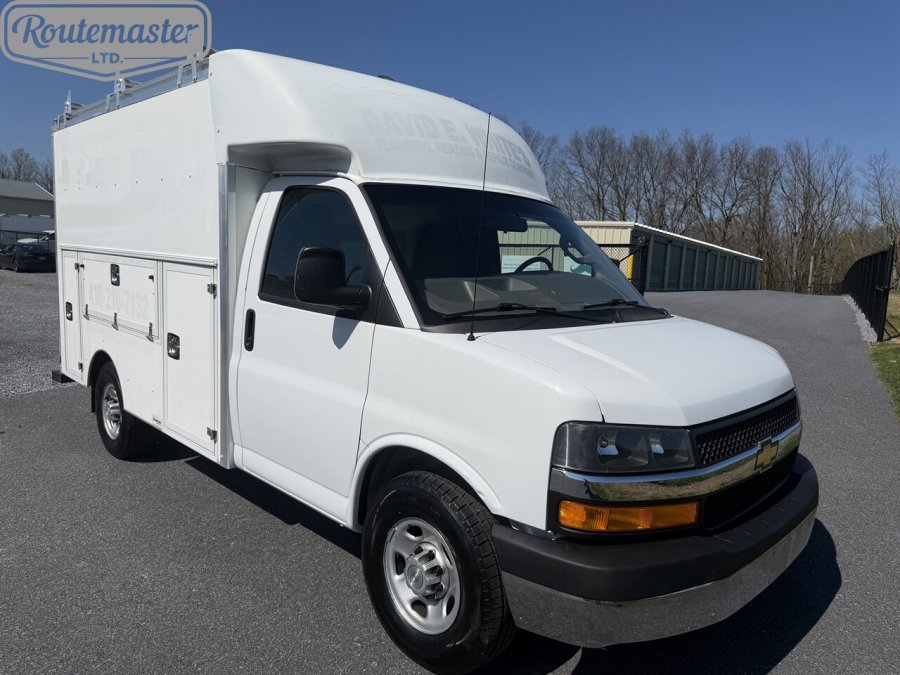
A used cargo van inspection checklist is a structured walkaround you complete before any money changes hands. Work through it in order, write down what you find, and score each item pass, caution, or fail.
Do the paperwork checks first, before you touch the van. If the history fails, the mechanical condition does not matter.
- Title and history. Confirm the title is clean (not salvage, rebuilt, or branded) and matches the seller’s ID. Pull a vehicle-history report and check for reported accidents, odometer rollback, liens, and open recalls by VIN through the NHTSA recall lookup. A lien on the title means the lender still has a claim, walk away unless it is cleared in writing.
- Service records. Ask for maintenance receipts, not verbal assurances. You want to see regular oil changes, transmission fluid service, brake work, and timing-belt or chain service if the engine uses one. Gaps of 10,000+ miles between oil changes on a high-mileage van are a caution flag.
- Body and frame. Bring a magnet and a flashlight. A magnet that will not stick to a panel means body filler over rust or collision repair. Look for overspray on window trim and rubber seals, mismatched panel gaps, and rust bubbling at wheel arches, rocker panels, and the roof seam. Frame rust is a fail, walk away.
- Doors and seals. Open and close every door, including the rear and side cargo doors. Test hinges, latches, and weather stripping. A door that sags or will not latch flush points to hinge wear or frame damage. Check for water stains inside the cargo area, which signal failed seals.
- Tires and brakes. Check tread depth with a gauge, below 4/32 inch means replacement soon. Uneven wear across a tire points to alignment or suspension trouble. Look at brake rotor condition through the wheel spokes and ask when pads and rotors were last replaced. A soft or spongy pedal on the test drive is a fail.
- Cold start. Arrive early and insist the engine is cold. Listen for rattles, ticking, or knocking at startup. Watch the exhaust: blue smoke means burning oil, white smoke means coolant, black smoke means rich fuel. Any warning light that stays on after startup, check engine, ABS, airbag, is a negotiating point at minimum.
- Transmission. On the test drive, shift through every gear, including reverse. Feel for slipping, harsh shifts, or delayed engagement. A transmission that clunks into gear or hesitates when cold is a costly repair waiting to happen. Check the fluid if the dipstick is accessible, dark or burnt-smelling fluid is a caution.
- Cargo area. Inspect the floor and walls for dents, moisture, and rust. Look under any mat or liner. Water intrusion often shows as rust at the floor seams or musty smell. Check that the partition, if present, is securely mounted and not hiding frame damage.
- Electrical and features. Test every light, wiper, AC setting, backup camera, and safety feature. Cargo vans often have upfitted wiring for shelving, inverters, or telematics, trace aftermarket wiring for poor splices or exposed wire. Electrical gremlins are time-consuming and expensive to chase.
- Undercarriage. Get underneath with a flashlight. Look for fluid leaks (oil, coolant, transmission, differential), rust-through on the frame and crossmembers, and damaged exhaust or fuel lines. Fresh undercoating can hide rust, be suspicious of a recently sprayed underside.
Any single fail on title status, frame integrity, or a cold-start knock is grounds to walk away. Do not let a low price override a structural or powertrain red flag, the repair bill will erase the savings.
For a point-by-point version you can print and carry, use our commercial truck inspection checklist. A deeper walkthrough of avoiding mechanical issues in used vans covers the trouble spots in more detail.
Why a Pre-Purchase Inspection for a Used Van Is Worth the Money
A pre-purchase inspection for a used van is an independent mechanical review by a technician you hire, not the seller. It is the cheapest insurance in the whole buying process.
The inspection covers compression, fluid condition, suspension, and frame integrity. It also gives you negotiating use.
We recommend an independent inspection even on vans sold as inspected. Two sets of eyes beat one, and the report protects your budget.
Used Cargo Van Total Cost of Ownership: What the Sticker Price Hides
Used cargo van total cost of ownership is the purchase price plus every dollar you spend to keep it working. The sticker is only the entry fee.
Budget for these lines:
- Fuel: higher for heavier loads and stop-and-go routes
- Insurance: commercial coverage costs more than personal
- Maintenance: oil, tires, brakes, and fluids on a schedule
A van that saves a little up front but spends a week in the shop each quarter is the more expensive choice. Our guide to avoiding hidden costs in used trucks breaks down the surprise line items buyers miss.
Reserve a Van That Has Already Been Inspected and Test-Driven
The hardest part of buying used is trusting the seller. That is where PA Commercial Trucks does the work for you. Every vehicle we sell is personally inspected, examined, and test-driven by our team, and we only stock vans we would buy for our own business.
Our process is built to remove the guesswork:
- Over 30 years of experience guiding business owners to the right vehicle
- Fair, upfront pricing with flexible financing options
- A simple $500 online reservation to hold the van you want
You can browse our inspected inventory and reserve the van that fits your load, your budget, and your daily route.
Frequently Asked Questions
How many miles is too many for a used cargo van?
There is no single cutoff, but 150,000 miles is a common caution point for full-size cargo vans, and 200,000 or more means you should expect major wear items soon. What matters more is how the miles were accumulated. A van with 130,000 highway miles and a documented maintenance history often outlasts one with 80,000 miles of stop-and-go delivery work and no service records. Read the service records, check the model year against known powertrain issues, and budget for the repairs the mileage implies.
What should I check when inspecting a used cargo van?
Work through the exterior first: rust around wheel wells and rocker panels, panel gaps, and tire wear. Then check the cargo area floor for dents and moisture, the door tracks and hinges, and the roof for leaks. Start the engine cold, listen for ticks or knocking, and check for blue or white exhaust smoke. Test the transmission through every gear, including reverse, and inspect the frame and undercarriage for rust and leaks. Finish with the electrics: lights, backup camera, HVAC, and any upfit wiring.
Should I get a pre-purchase inspection for a used cargo van?
Yes. An independent mechanic who has no relationship with the seller will put the van on a lift, scan for stored fault codes, check compression and fluid condition, and measure brake and tire life. Expect to pay for the inspection, but it is far cheaper than discovering a failing transmission a month after purchase. Use the findings as negotiation leverage: a documented repair estimate gives you a concrete number to discuss with the seller rather than a vague discount request.
Is a high-mileage cargo van worth buying?
It can be, if the price reflects the remaining life in the vehicle and the service records are complete. A high-mileage van with a documented timing belt replacement, fresh transmission fluid, and a clean vehicle history report is a different proposition from one with no records at all. Calculate the used cargo van total cost of ownership before you commit: purchase price plus expected repairs, maintenance, insurance, and downtime. If that total still beats a lower-mileage alternative over the years you plan to keep it, the high-mileage van is the better buy.
Finding a reliable used cargo van is not about luck. It is about matching the specs to your real load, checking the history, and getting a proper inspection before you commit. Routemaster, LTD makes that last step simple with fully inspected, test-driven vehicles, flexible financing, and upfront pricing. Get started with Routemaster, LTD and reserve a van that is ready to work on day one.
