
Table of Contents
- Understanding Service Body Truck Sizes and Their Impact on Your Operations
- 8-Foot vs. 11-Foot Service Body: Key Differences and Trade-Offs
- Measuring and Assessing Service Body Dimensions for Your Needs
- Calculating Service Truck Payload Capacity and Weight Limits
- Ensuring Truck Chassis Compatibility with Your Service Body
- Matching Body Size to Your Trade and Work Scenarios
- Common Mistakes to Avoid When Selecting a Service Body Truck
- Your Service Body Truck Selection Checklist
- Frequently Asked Questions
Last Updated: October 18, 2026
Understanding Service Body Truck Sizes and Their Impact on Your Operations
Choosing the right service body truck size is one of the most critical decisions you’ll make for your business. Get it wrong and you’re either wasting money on unneeded capacity or struggling to fit your tools into a truck that’s too small. At Routemaster, LTD, we’ve spent over 30 years helping small business owners find the right vehicles for their specific needs.
The size of your service body truck directly affects how much you can carry, how efficiently you work, and how profitable your business becomes. This guide walks you through the key factors that determine which service body truck size fits your needs.
8-Foot vs. 11-Foot Service Body: Key Differences and Trade-Offs
The two most common service body truck sizes are 8-foot and 11-foot bodies. Understanding the differences between them is essential to making the right choice.
An 8-foot service body offers better maneuverability, easier parking in tight spaces, and lower fuel consumption, ideal for crews in dense urban areas or narrow job sites. The trade-off is less compartment room for tools and materials.
An 11-foot service body provides significantly more storage capacity, letting you carry more equipment, organize it with additional shelving, and reduce trips back to the shop. The downside is a larger footprint: turning radius increases, parking gets harder, and fuel costs rise.
| Feature | 8-Foot Body | 11-Foot Body |
|---|---|---|
| Storage Capacity | Moderate | High |
| Maneuverability | Excellent | Good |
| Parking Ease | Very Easy | Challenging |
| Fuel Efficiency | Better | Lower |
| Best For | Urban work, tight spaces | High-volume jobs, material hauling |
| Typical Crew Size | 1-2 people | 2-4 people |
The choice often comes down to work environment and job scope: urban contractors typically favor 8-foot bodies, while regional or multi-site operations lean toward 11-foot bodies for the extra capacity.
Before deciding on body length, spend a week tracking how many trips you make to your vehicle per day. If you’re walking back to the truck more than five times per job, a larger body will save you time and frustration.
Measuring and Assessing Service Body Dimensions for Your Needs
Getting accurate measurements is where most buyers stumble. Understand these key dimensions before matching a service body to your chassis.
Critical Measurements: Wheelbase, Cab-to-Axle Distance, and Setback
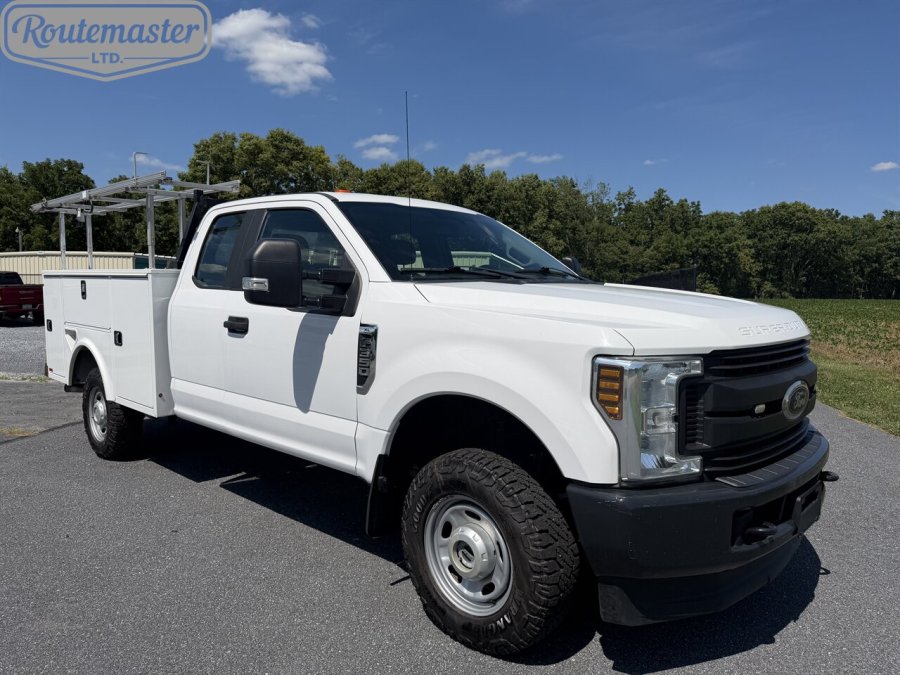
Wheelbase is the distance between the centers of your front and rear wheels, and it determines how much space you have for the service body behind the cab.
Cab-to-axle distance (CTAD or setback) is the distance from the back of the cab to the center of the rear axle, the critical measurement for body length. A 60-inch CTAD fits a different body than a 72-inch CTAD.
Body length is measured from the front of the cargo area (right behind the cab) to the rear of the truck. An 8-foot body is approximately 96 inches long. An 11-foot body is approximately 132 inches long.
These measurements matter because of overhang, how far the body extends beyond the rear axle. Too much overhang hurts handling, reduces payload capacity, and can violate weight regulations.
Compartment Layout and Storage Requirements
Once you’ve settled on body length, plan your compartment layout, organization directly impacts on-the-job efficiency.
Most service bodies include:
- Side compartments for frequently used tools
- A main cargo area for larger equipment
- Shelving to maximize vertical space
- Drawers or bins for small parts and fasteners
Put the tools you grab first in the most accessible compartment, and store heavy items low for proper weight distribution.
Overloading one side of the service body creates uneven weight distribution. This reduces handling stability and can cause the truck to lean or tip in turns. Always balance your load side-to-side.
Calculating Service Truck Payload Capacity and Weight Limits
Payload capacity is the maximum weight your truck can safely carry, including the service body, tools, materials, passengers, and accessories.
Start with your truck’s Gross Vehicle Weight Rating (GVWR), the maximum fully loaded weight, found on a placard inside the driver’s door. Subtract the curb weight (empty, with full fuel and fluids) from the GVWR to get your available payload capacity.
Then subtract the weight of the service body itself. What remains is the weight you can safely load with tools, materials, passengers, and accessories.
Worked example with realistic additions:
- GVWR: 14,000 pounds
- Curb weight: 8,500 pounds
- Available payload: 5,500 pounds
- Service body weight: 2,000 pounds
- Remaining capacity: 3,500 pounds
- Two crew members (including gear): 400 pounds
- Shelving, drawers, and accessories: 300 pounds
- Safe cargo capacity for tools and materials: 2,800 pounds
This means you can load 2,800 pounds of tools and materials.
Don’t forget axle ratings. Even under GVWR, you can exceed the front or rear axle rating, the rear axle carries most of the body and cargo weight. Check the rear axle rating (RAWR) on the door placard or in the owner’s manual.
Tire ratings matter too. Your tire ratings must meet or exceed the gross axle weight rating, so if you upgrade to a heavier service body, verify your tires and wheels are rated for the increased load.
Overloading one side of the service body creates uneven weight distribution. This reduces handling stability and can cause the truck to lean or tip in turns. Always balance your load side-to-side and front-to-back.
Ensuring Truck Chassis Compatibility with Your Service Body
Not every service body fits every chassis. Compatibility depends on several factors.
Your truck’s wheelbase determines the maximum body length you can install: shorter wheelbases take shorter bodies, longer ones handle longer bodies.
Your chassis frame width must match the service body width, most service bodies are 79 to 81 inches wide (inside dimension).
Axle configuration matters too: dual rear axle trucks support heavier service bodies and higher payload capacities than single rear axle trucks.
Check the manufacturer’s compatibility charts before purchasing to confirm which truck models and years work with specific body sizes. Routemaster, LTD can verify compatibility before you commit.
Matching Body Size to Your Trade and Work Scenarios
Different trades have different needs. Use this trade-by-trade mapping to narrow your options before you shop, matching body length, compartment layout, and chassis class to the way you actually work.
Electricians typically need quick access to wire, conduit, breakers, and hand tools. An 8-foot body on a single-rear-wheel chassis (such as a 2500 or 3500 series) with organized side compartments works well.
Plumbers often carry copper pipe, fittings, water heaters, and heavy tools. An 11-foot body on a dual-rear-wheel chassis (4500 or 5500 series) with strong shelving and weight distribution becomes more valuable.
HVAC technicians need space for refrigerant, copper lines, compressors, and diagnostic equipment. An 11-foot body with climate-controlled compartments (if available) helps protect sensitive equipment.
Landscapers and grounds maintenance crews need volume for mulch, soil, plants, and equipment. An 11-foot body or even a larger platform bed serves better than a traditional service body.
Roofing crews need secure storage for ladders, shingles, and safety equipment. An 8-foot body with roof racks and tie-down points works well for smaller crews. Larger crews might need an 11-foot body.
Ask yourself: What’s my primary cargo, how heavy is it, and how often do I access it?
Before you commit, spend a week tracking how many trips you make to your vehicle per day and what you carry on each trip. If you’re walking back to the truck more than five times per job, a larger body or a better compartment layout will save you time and frustration.
Common Mistakes to Avoid When Selecting a Service Body Truck
Most mistakes happen when buyers focus on one factor while ignoring others.
Mistake 1: Choosing based on price alone. A cheaper 8-foot body might seem smart until you realize you need an 11-foot body to meet your daily demands. The money you save upfront costs you in efficiency and lost productivity later.
Mistake 2: Ignoring payload capacity. Buying a truck with a service body that leaves you only 2,000 pounds of cargo capacity sounds fine until you load it and discover you’re 500 pounds over limit on your first job.
Mistake 3: Overestimating what you need. An 11-foot body burns more fuel and costs more to maintain. If you only need 60 percent of that capacity, you’re paying for unused space.
Mistake 4: Forgetting about maneuverability. An 11-foot body in a dense urban market means constant parking frustrations and difficulty navigating narrow streets. This hidden cost shows up in time lost and stress gained.
Mistake 5: Not verifying compatibility. Assuming a service body will fit your truck chassis leads to expensive surprises. Always verify wheelbase, frame width, and axle configuration before purchasing.
Your Service Body Truck Selection Checklist
Use this checklist to evaluate service body truck options systematically.
Measurements and Fit:
- Confirm your truck’s wheelbase
- Measure cab-to-axle distance
- Verify frame width compatibility
- Check axle configuration (single or dual)
- Calculate total overhang with proposed body
Capacity and Weight:
- Determine GVWR of your truck
- Calculate available payload capacity
- Confirm service body weight
- Estimate your typical cargo weight
- Ensure payload capacity exceeds typical load by 20 percent
Work Requirements:
- List your primary tools and materials
- Calculate typical daily cargo weight
- Identify how many compartments you need
- Determine storage access priorities
- Plan for future business growth
Operational Factors:
- Assess primary work locations (urban vs. regional)
- Consider turning radius requirements
- Evaluate parking constraints
- Estimate fuel cost differences between sizes
- Calculate maintenance cost implications
Inspection and Purchase:
- Request full inspection of any used service body truck
- Verify all compartments operate smoothly
- Check for rust, dents, or structural damage
- Test all locks and latches
- Confirm warranty coverage
Selecting the right service body truck size requires balancing capacity, maneuverability, payload limits, and your specific work demands. The wrong choice creates frustration and wasted money. Our team personally inspects every truck and can guide you through the measurement process, verify compatibility, and ensure you get a vehicle that works for your business. Ready to find your next service body truck? View our trucks today and let our experts help you make the right choice.
Frequently Asked Questions
How do I choose the right size service body truck?
Start by assessing your daily tool and equipment storage needs, then measure your truck’s wheelbase and cab-to-axle distance to determine which body length fits safely. Calculate your payload capacity by subtracting the service body weight from your truck’s Gross Vehicle Weight Rating. Compare 8-foot bodies, which offer easier maneuverability and higher payload, against 11-foot bodies, which provide more storage. Match the final selection to your primary work scenarios and any towing demands. Use the checklist in this guide to verify chassis compatibility before purchasing.
What is the difference between an 8-foot and an 11-foot service body?
An 8-foot service body typically allows higher payload capacity because the lighter body leaves more weight allowance for tools and materials. An 11-foot body provides more storage but requires a longer wheelbase truck. The 8-foot body is more maneuverable in tight job sites and parking areas, while the 11-foot body suits crews needing extensive equipment inventory. Choose based on storage volume needs versus payload requirements for your specific trade.
How much payload capacity do I need for a service truck?
Payload capacity depends on the tools, equipment, and materials you haul daily. Add the weight of all items you typically carry: hand tools (50-200 lbs), power tools (100-500 lbs), ladders (50-100 lbs), materials (highly variable), and crew members (200 lbs per person). Consult your truck’s specification sheet to confirm exact limits.
What measurements do I need before buying a service body truck?
Measure your truck’s wheelbase (distance from the center of the front axle to the center of the rear axle), cab-to-axle distance (rear bumper to rear axle), and overall length. Verify the Gross Vehicle Weight Rating and curb weight from the manufacturer’s label. Determine the maximum body length that fits without creating excessive overhang beyond the rear axle. Check turning radius and parking constraints at your job sites. Confirm chassis frame condition and any existing damage. These measurements prevent mismatched body-to-chassis combinations that reduce payload, affect handling, or violate weight regulations.